Insights
Perspectives on AI-first customer experience from the team at MING Labs.
Articles
In-depth perspectives, manifestos, and case studies.
What We Learned When We Sent AI Agents to Buy Insurance
Five AI agents. Same policy. Same day. Five completely different answers. What we found when we tested how AI agents actually interact with insurance brands.
Read article →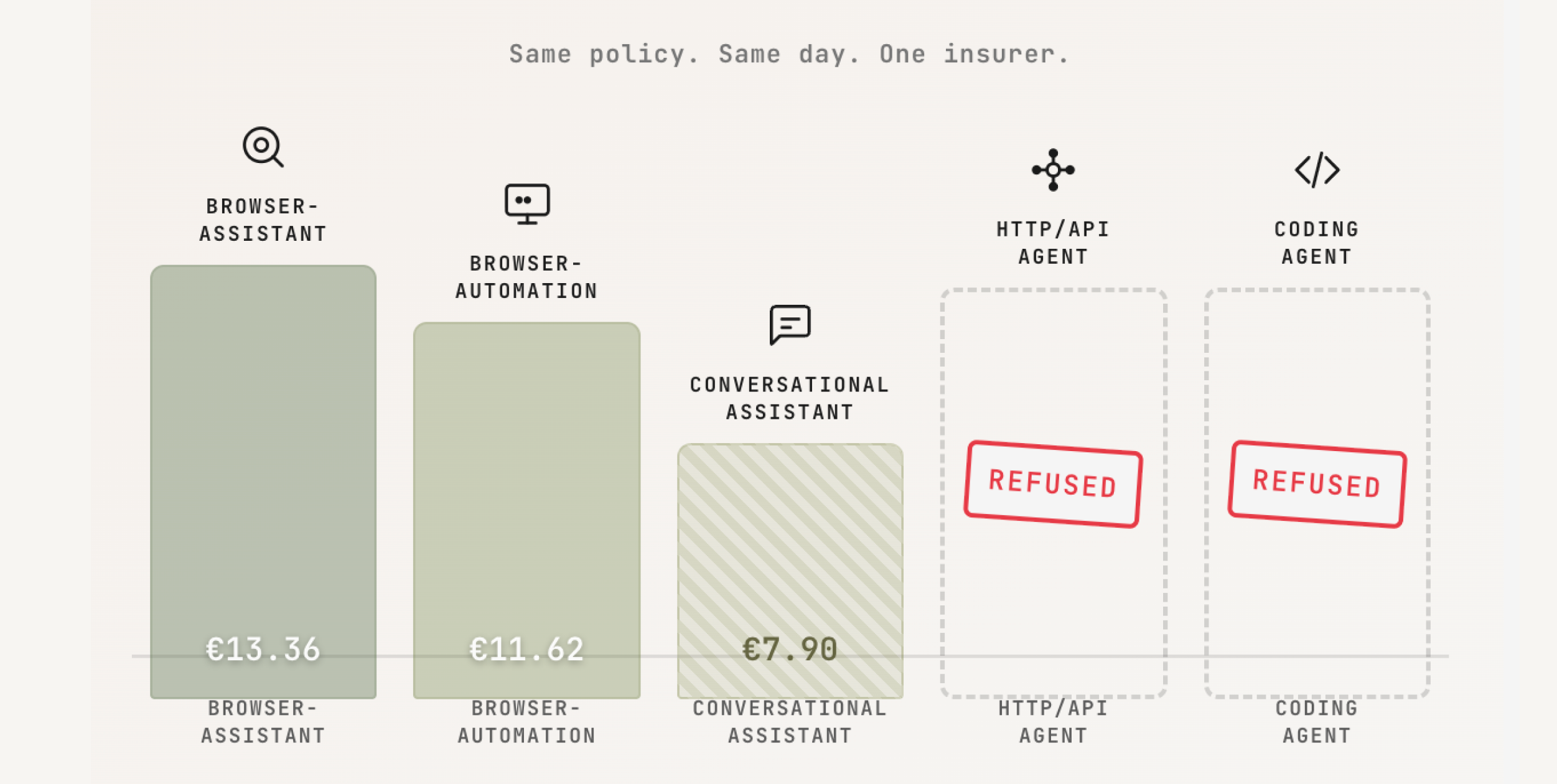 Agent Experience (AX)
Is Your Brand Ready for AI Agents?
8 convictions from 18 months measuring how AI agents evaluate brands — and what happens when they start to buy.
Read article · 9 min → GEO & AI VisibilityThe Website That Acts
WebMCP turns your website from something AI reads into something AI uses. The agentic web is here — your website needs to be actionable.
Read article · 8 min → GEO & AI VisibilityThe Misquoted Company
Your sales team tells one story. AI tells another. The gap is where citations die. Three narratives — one alive, one frozen, one fossilized.
Read article · 7 min → AI & Organizational DesignThe Swarm Thesis
Why the future isn't one developer + one AI — it's something stranger. Ten engineers, ten salaries, the output of 4.6 people.
Read article · 6 min → GEO & AI VisibilityThe Invisible Clients
Your content has three clients. You've only met one. SEO gets you retrieved. GEO gets you recommended.
Read article · 8 min → Memory InfrastructureThe Website of the Future
Your company learns every day. Your website doesn't. The website of the future is written by the ghost of every conversation you've ever had.
Read article · 6 min → GEO & AI VisibilityThe AI is Eating Your Funnel
Your buyers now start with ChatGPT, not Google. What that means for B2B discovery.
Read article · 8 min →Answers
Quick explanations for common questions about Intent-Native CX and GEO.
What is Intent-Native CX?
An AI-first customer experience architecture where touchpoints share memory through a unified Intent Graph, so context compounds and customers never repeat themselves.
Read answer → AnswerIntent-Native CX vs CRM
CRM tracks relationship history (what happened). Intent-Native CX tracks forward-looking intent (what customer needs next). They're complementary.
Read answer → AnswerIntent-Native CX vs CDP
CDPs infer preferences from behavior for audience segments. Intent-Native CX remembers stated intent for journey continuity. Different data, different purpose.
Read answer → AnswerIntent-Native CX vs RAG
RAG retrieves documents for the current query. Intent-Native CX remembers the full journey context. RAG is stateless; the Intent Graph is stateful.
Read answer → AnswerWhat is an Intent Graph?
An event-sourced intent fact store that carries structured customer intent from first question to Sales handoff. Typed facts, not text chunks.
Read answer → AnswerIntent Graph vs RAG
RAG retrieves text chunks by similarity. The Intent Graph stores typed facts by explicit structure. Similarity is not understanding.
Read answer → AnswerFirst-Party vs Third-Party Intent
Third-party intent is inferred from behavior. First-party intent is expressed in words. Third-party tells you who to reach; first-party tells you what to say.
Read answer → AnswerHow Does Intent Capture Work?
Three patterns: Answer Page Context, Progressive Confirmation, and Downstream Capture. The page URL is the intent signal — no forms required.
Read answer → AnswerIntentCX vs Intent-Native CX
T-Mobile's IntentCX predicts from behavioral signals. Intent-Native CX remembers what customers declared to AI assistants. Different problems, different architectures.
Read answer → AnswerWhy Are My Website's Interactive Features Invisible to AI?
AI agents read HTML but cannot execute JavaScript — making your configurators, calculators, and booking systems invisible to every AI that visits your site.
Read answer → AnswerWhat Does WebMCP Mean for GEO?
WebMCP expands GEO from citation-only to citation plus invocation — adding tool exposure as a second optimization discipline alongside content quality.
Read answer → AnswerCited vs Used: What's the Difference?
Citation gets your brand mentioned in AI answers. Invocation gets your tools executed by AI agents. Different strategies, different advantages, different parts of the funnel.
Read answer → AnswerMCP vs WebMCP: What's the Difference?
MCP connects AI to backend systems — databases, APIs, dev tools. WebMCP connects AI to public websites — configurators, calculators, booking forms. Same inspiration, different domains.
Read answer → AnswerHow Do AI Agents Interact with Websites in 2026?
AI agents crawl, read, cite, and now invoke websites — four interaction layers that define whether your content gets found, referenced, or used by AI.
Read answer → AnswerOpenAI Ads vs Google AI Commerce vs Amazon MCP
OpenAI sells ad space in ChatGPT. Google processes transactions inside AI answers. Amazon brokers product data to AI agents. All three put the platform between you and the customer. There's a fourth option.
Read answer → AnswerAmazon Just Proved Why You Need to Own Your AI Presence
Amazon, Google, and OpenAI are building infrastructure to control brand visibility in AI responses. The alternative: make your own website the source AI agents trust and use directly.
Read answer →